From Arrival to Delivery: Shipment Updates
An update saying your auto parts have arrived can be encouraging without telling you when the workshop can receive them. Arrival at a port, completion of clearance, handover to a delivery operator and receipt at the agreed destination describe different events.
Published pending human review of service details and native-language copy. Confirm service terms with JTLGO before ordering.
On this page
- Quick answer
- Start with the destination you actually agreed
- Use a milestone checklist instead of a single “where is it?” question
- Read status wording in its own system
- Check whether the update covers the whole order
- Agree on inquiry expectations before you need them
- Turn a delivery notice into a receiving plan
- Frequently asked questions
- Confirm the updates for your shipment
- Prepare a specific inquiry

Quick answer
Arrival, clearance, handover to a delivery operator and receipt at the destination are different events. Check each milestone against the destination you agreed, read status wording in its own system, and confirm whether an update covers the whole order. Turn a delivery notice into a receiving plan for your workshop.
For this step, see DDP shipping scope from China.
The most useful update identifies what happened, where it happened, which packages it covers and what needs to happen next. Ask your provider which milestones are available for the actual service, rather than assuming every shipment has live tracking or the same set of status labels.
JTLGO provides broad Africa DDP coverage, with South Africa DDP now available. The reporting and delivery arrangements for a particular shipment should be confirmed with the applicable written service scope.
Start with the destination you actually agreed
Keep the quote's delivery point beside the shipment reference. A port arrival does not answer whether the parts have reached a warehouse or workshop further inland. If the offer involves collection, record the collection location and release requirements separately.
Also distinguish a transport update from contractual delivery. Under Incoterms® 2020 DDP, the seller's delivery obligation is linked to the agreed destination, with the goods ready for unloading. A shipping service's tracking label does not by itself establish that every sales-contract obligation has been fulfilled. The ICC Academy's DDP guidance explains the named-place and unloading distinction.
If the transport provider uses DDP as a service label, ask how its handover point relates to your purchase contract. Keep unloading arrangements and any additional receiving services explicit.
Use a milestone checklist instead of a single “where is it?” question
The table below is a set of suggested questions. It is not a promise that every route provides each event or document, and the sequence may vary with the service.
Scroll sideways or use the arrow keys to see all columns.
| Milestone to clarify | What to establish | Possible supporting record to ask about |
|---|---|---|
| Arrival at a gateway | Actual location, date and shipment coverage | Carrier arrival event or provider confirmation |
| Clearance in progress | Whether information or a decision is outstanding | Specific request or progress explanation |
| Clearance completed | Whether release has been confirmed for these goods | Release confirmation available to the customer |
| Available for onward movement | Whether the goods are ready for the next leg | Warehouse or dispatch confirmation |
| Handed to a delivery operator | Who now holds the delivery task | Local reference, if one is issued |
| Delivery planned or underway | Whether there is an estimate or agreed appointment | Delivery notice or booking confirmation |
| Received at destination | Which packages reached the agreed point | Delivery record or proof of receipt, if available |
For each relevant row, record the contact who can answer questions. A customs representative, warehouse and delivery operator may handle different stages, but you should know your agreed inquiry route rather than contacting unfamiliar parties independently.
Read status wording in its own system
A status label is meaningful only with its definition. “Clearance update” does not necessarily mean clearance has finished, and “delivery scheduled” does not establish that a vehicle has left. Ask what the provider means when a term is ambiguous.
As one carrier-specific example, DHL Express's tracking guide distinguishes clearance processing complete, out with courier and delivered. These definitions illustrate why separate stages matter; they are not evidence that JTLGO uses DHL, the same terminology or the same reporting system on your route.
Keep the exact wording and timestamp when asking a question. If the displayed time zone is unclear, include a screenshot and ask for clarification. This is more useful than paraphrasing an old event as “arrived today.”
Check whether the update covers the whole order
A multi-part order may have several package references. Match tracking information to the packing list instead of assuming that one event covers every box or crate. Ask whether an update applies to the full shipment, a particular pallet or only the packages listed under that reference.
When the shipment is divided into separate movements, keep a simple list of package identifiers, related parts-list lines and last confirmed events. Describe any gap precisely: for example, the record covers two identified crates while the third has no matching update. This is a comparison of records, not a conclusion that a package has been lost.
If you receive a new local reference, retain the original one too. Ask how they correspond so you can continue the same inquiry without losing the history.
Agree on inquiry expectations before you need them
Ask which updates will be provided proactively, which require an inquiry and how to contact the responsible team. Confirm when it is appropriate to request an investigation and how a next response will be arranged. Do not assume a universal update interval or response deadline.
If a status remains unchanged, send the reference, last visible event, its time, the relevant destination and any earlier reply. Ask three focused questions: what is the last confirmed physical milestone, is anything needed from us, and when should we expect the next response?
A quiet tracking page alone does not establish loss, clearance failure or inactivity. Equally, an estimate that has passed deserves a specific follow-up rather than continued reliance on the original date.
Turn a delivery notice into a receiving plan
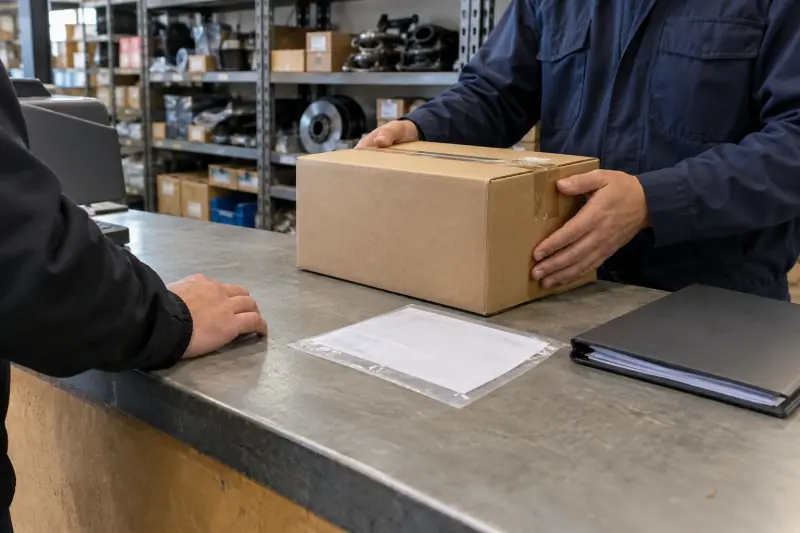
When delivery is being arranged, confirm the address, receiving contact and site hours through the established private channel. Mention booking rules and known vehicle-access limitations. For heavy parts, confirm the agreed unloading plan and equipment before accepting a proposed appointment.
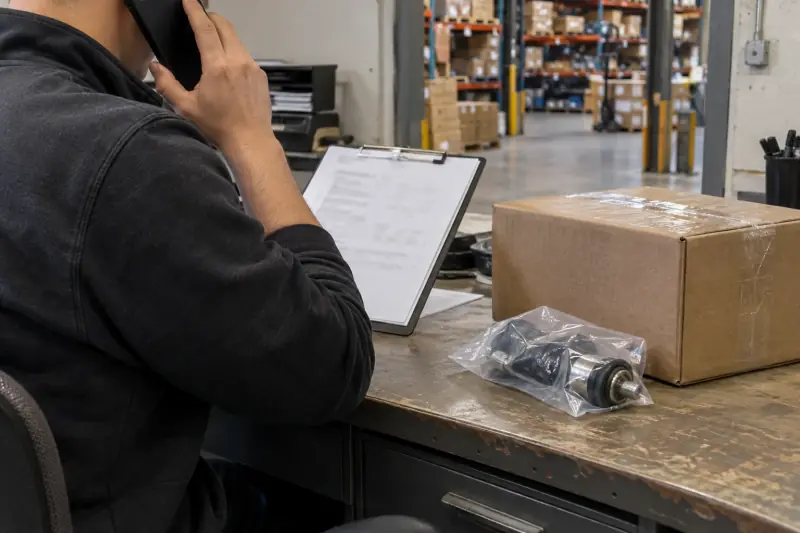
Prepare the packing list so the receiving person can compare package identifiers and count. Record visible discrepancies promptly and ask the provider about the applicable notification procedure and deadlines. Do not wait for a complete investigation before reporting a time-sensitive issue.
A delivery record can support the fact of handover. It does not prove that every internal component is correct, undamaged or functional. Keep package receipt, item verification and any technical checks as separate steps in your receiving notes.
Frequently asked questions
Does arrival mean my parts are ready for delivery?
Ask which location and event the update refers to. Clearance, release, onward movement or delivery scheduling may still need confirmation.
Should every shipment have a live tracking link?
Ask what reporting the selected service provides. A provider confirmation or a stage-specific reference may be the available method; do not assume continuous location visibility.
Can I book a mechanic based on the arrival estimate?
Treat an estimate according to its stated scope and certainty. Before making dependent commitments, ask about the remaining stages and whether final delivery has actually been arranged.
What should I do if a shipment says delivered but I cannot locate it?
Contact the agreed service representative promptly. Ask which address, package references and handover record support the status, and check with the authorized receiving team. Report the discrepancy without assuming its cause.
Confirm the updates for your shipment
Ask JTLGO about your delivery scope and available milestones. Include your shipment reference if you have one, or your parts list and destination for a new inquiry, and identify the next event you need to plan around.
Prepare a specific inquiry
Provide destination country, city and postcode, cargo description and condition, declared value, carton dimensions and weight, and receiver requirements. Ask whether this cargo and destination have an available route and exactly what DDP includes; coverage is not universal.