Wrong Order, Wrong Item, or Shipping Damage: Who Should Handle the Issue?
Start with what differs from the confirmed order and when you first noticed it. Then contact the party handling that part of the transaction, asking who must review the evidence or submit any formal report. You do not need to settle responsibility before notifying the relevant contact.
Published pending human review of service details and native-language copy. Confirm service terms with JTLGO before ordering.
On this page
- Quick answer
- Rebuild the confirmed order first
- Choose a first contact from the observed issue
- Separate evidence from responsibility
- Notify promptly while preserving the evidence
- Keep one factual handover record
- Ask who can decide the next step
- Frequently asked questions
- Start with a clear issue description
- Prepare a specific inquiry
Quick answer
Start from what differs from the confirmed order and when you noticed it. Contact the party handling that part of the transaction, and ask who must review the evidence or submit any formal report. You do not need to settle responsibility first: notify promptly, preserve the evidence and keep one factual handover record.
For this step, see Refund and returns policy.
An incorrect selection, a different item supplied and damage discovered at delivery can look similar when the immediate problem is simply “this part cannot be used.” They require different records. A good first message describes the discrepancy without assigning blame before the facts have been checked.
The routes below are suggested starting points. They do not decide liability, create refund rights or replace the reporting process and deadlines that apply to your order.
Rebuild the confirmed order first
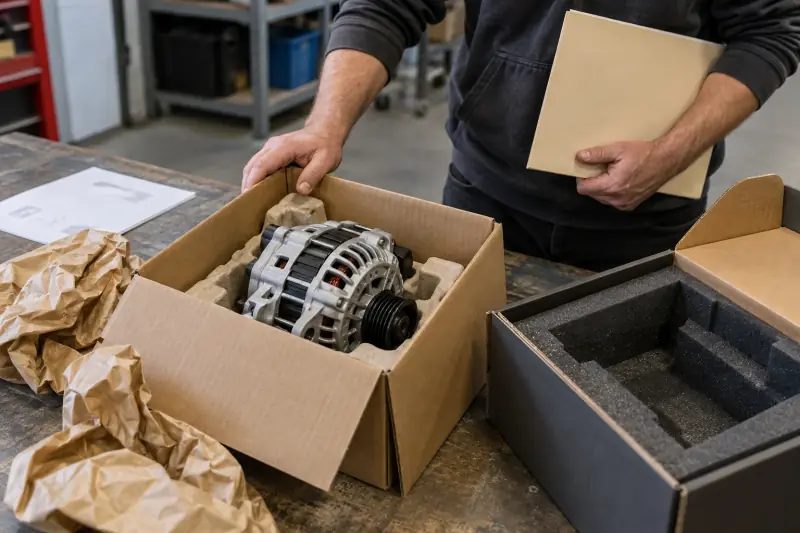
Find the final itemized order, including changes accepted after the original inquiry. Compare the requested part number, confirmed part number, condition, quantity, side, vehicle application and included accessories.
Keep the initial request as well. It can help show whether a mistake arose when requirements were described, translated into an order line, or changed during purchasing. However, a draft shopping list and the final purchase confirmation are different records; label them clearly.
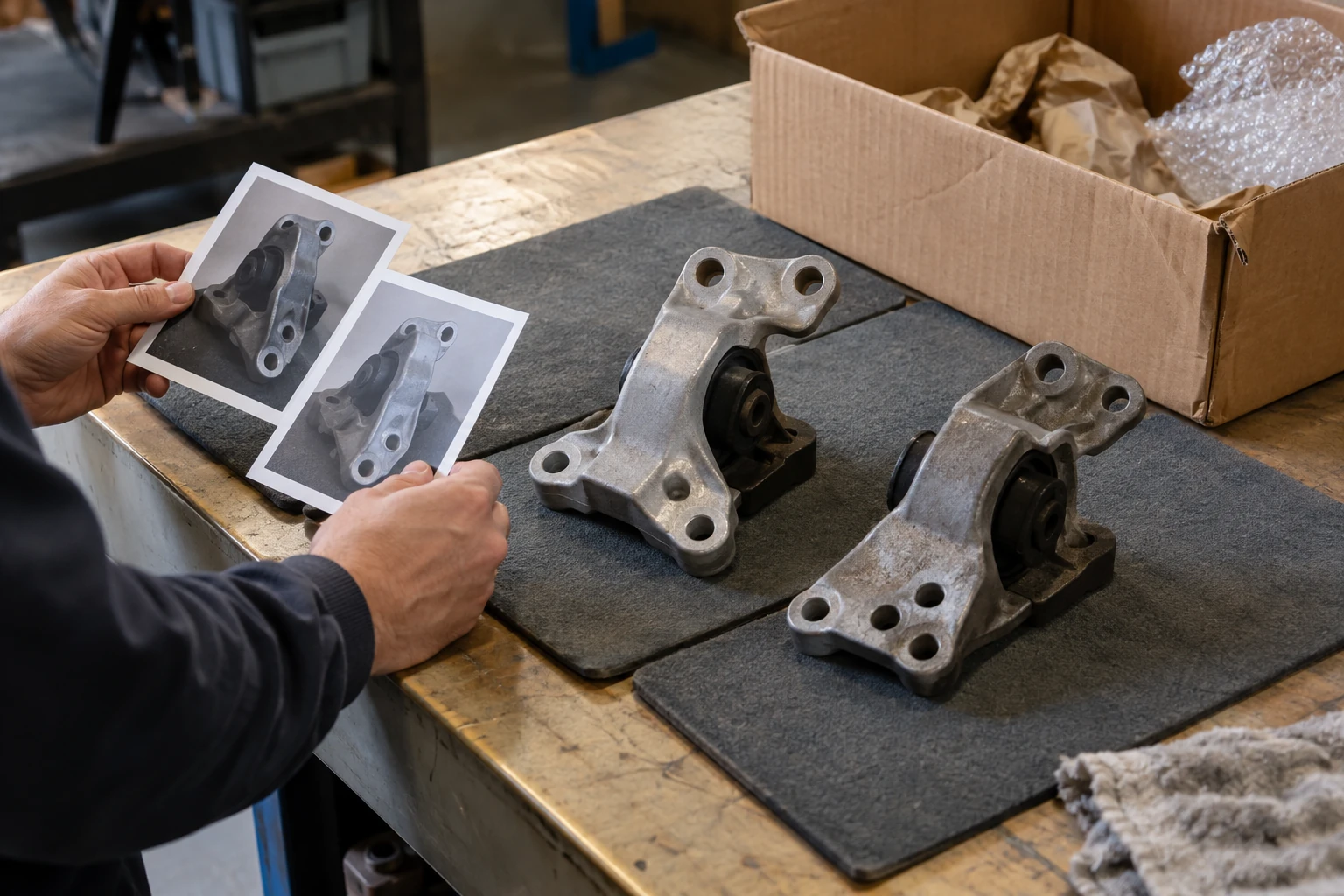
If a substitute was proposed, locate the written explanation and your response. A different identifier does not alone prove the wrong item was sent. Ask the supplier to explain any supersession or alternative against the agreed specification. Do not install a questionable component simply to see whether it fits.
Choose a first contact from the observed issue
Scroll sideways or use the arrow keys to see all columns.
| Observed situation | Useful first contact | Evidence to send | Question to resolve |
|---|---|---|---|
| Received item matches the order, but may not suit the vehicle | Seller or purchasing contact | Confirmed specification and application details | What selection or exchange options apply? |
| Actual part identifier differs from the confirmed line | Seller or purchasing contact | Order version, labels and item photographs | Was a substitution agreed or a different item supplied? |
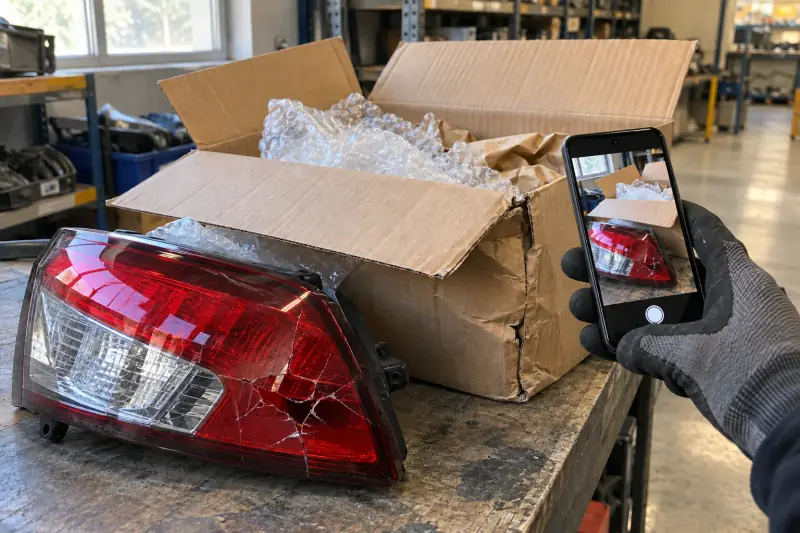
| Damage is visible on receipt | Designated shipment or after-sales contact | Packaging, item condition and receipt details | Who records the report and arranges review? |
| An entire package is missing | Shipment contact | Package count, references and delivery record | Was it split, delayed or recorded as delivered? |
| A received package lacks an item | Purchasing and shipment contacts as appropriate | Packing list, count and packing evidence | At what stage can the quantity be verified? |
| A functional problem appears later | Seller or designated warranty contact | Observations and qualified diagnostic records | What assessment is required under the applicable terms? |
These are routes for questions. A carrier, seller, warehouse and purchasing agent may hold different evidence, and more than one may need to contribute.
Separate evidence from responsibility
A crushed carton and a broken housing support an investigation into condition. They do not, on their own, establish when the damage occurred or who bears the loss. Similarly, a warehouse photograph showing the right carton does not necessarily establish the contents, functionality or correct packing throughout the journey.
For each claim, keep three separate lines:
- Observed: what a photograph, count or document actually shows.
- Unknown: what still needs checking against another record.
- Requested: the clarification or decision you need next.
For example, describe a mismatch between the received label and the confirmed order line, then ask for the dispatch label and substitution record. This is an illustrative way to write a report, not a customer case or proof of seller error.
If multiple issues affect one order, list them separately. A missing accessory and a suspected electrical fault should not be merged into a single unsupported damage claim.
Notify promptly while preserving the evidence
Ask the named contact which reporting deadlines apply, who is eligible to file and what documents are required. First notification, a formal claim and a complete evidence submission may be different steps. Do not wait for every photograph or a workshop report before asking how to protect the reporting window.
FedEx's US claims guidance illustrates why evidence requirements need checking: it describes purchase documents, damage photographs and retention of packaging and contents. Its service scope and rules must not be transferred to a JTLGO shipment or another carrier. FedEx claims guidance
Retain original photographs and make separate annotated copies if useful. Preserve the packaging where safe and ask before arranging a return, repair or disposal that could alter the evidence. If a part is leaking, unstable or otherwise unsafe, prioritize appropriate professional assistance; do not handle it solely to improve a photograph.
Keep one factual handover record
Use a short record so each contact works from the same baseline:
- Relevant order line and shipment reference.
- Expected item, quantity and condition.
- Actual observation and date discovered.
- Current location of the goods and packaging.
- Evidence filenames and the stage each represents.
- Contacts notified, dates and any case reference supplied.
- Applicable reporting instructions received.
- Unresolved questions, next contact and agreed follow-up arrangement.
Send full order references privately through a verified channel. For photographs shared outside the parties reviewing the issue, remove unrelated names, addresses, phone numbers and visible customer records. Keep the originals available for an authorized review rather than altering your only evidence copy.
Ask who can decide the next step
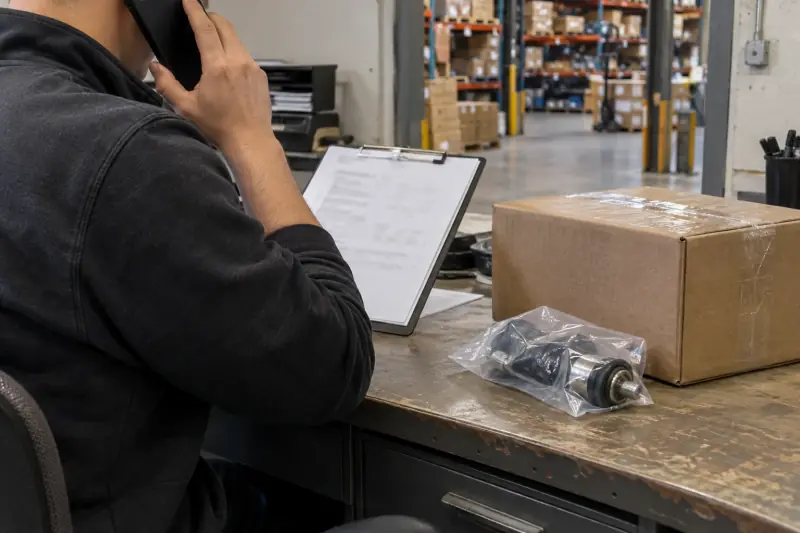
The person answering a tracking inquiry may not be authorized to accept a return or approve a settlement. Ask who can make each decision, whether the seller must inspect the item and whether a carrier investigation runs separately.
JTLGO's published terms direct transaction-specific rights and responsibilities to the contracting party identified in the relevant documents. Keep your quotation, order confirmation and invoice together when clarifying that role. JTLGO Terms of Service
Request the available options in writing, including conditions and cost allocation. Acknowledgment of an issue or receipt of evidence is not approval of compensation. If parties disagree, ask them to identify the record or applicable provision supporting their position instead of repeatedly circulating an accusation.
Frequently asked questions
Should I contact only the carrier for visible damage?
For a JTLGO delivery issue, notify JTLGO and the local delivery carrier immediately. Ask who is authorized to submit the formal carrier claim, but do not delay initial notification while that is clarified. Record visible delivery anomalies where possible and retain packaging and goods safely.
Start with the designated shipment contact and ask who must file. The contracting shipper or another party may need to submit the carrier report, while the seller may also need notice.
Does an incorrect selection mean no help is possible?
Ask the seller or purchasing contact about the actual options. Acceptance, costs and eligibility depend on the circumstances and applicable terms.
Is the party holding the photographs automatically responsible?
No. Possessing evidence and bearing responsibility are separate questions. Records from different stages may be needed to assess the issue.
Can I replace the part while the issue is investigated?
Ask how a separate purchase would affect the existing review and whether any proposed costs are accepted. Do not assume a new purchase will be reimbursed.
Start with a clear issue description
For an order or shipment arranged through JTLGO, contact JTLGO with your issue summary. Include the reference privately, affected lines, discovery date and available evidence. Ask for the appropriate reporting channel, applicable deadlines and the party who can confirm the next step.
Prepare a specific inquiry
Prepare item identifiers, packaging and arrival-condition photos, the timeline and the issue to review; share any order or personal details only through the private contact channel. The stated insurance is Loss Only: damage is not covered. Evidence preparation or a support request does not guarantee compensation or a return service.