Same Car Model, Different Part: What Details Should You Confirm?
A familiar model name is a starting point for buying a replacement part. Before payment, the supplier needs enough information to connect the exact item offered with the vehicle and installation position you have described. A listing headed with the right model name can still leave important questions unanswered.
Published pending human review of service details and native-language copy. Confirm service terms with JTLGO before ordering.
On this page
- Quick answer
- Record the vehicle details you actually know
- Describe the installation position without ambiguity
- Connect the description to an exact part number
- Use a specification confirmation card
- Make photographs and measurements purposeful
- Review the answer before authorizing the order
- Frequently asked questions
- Send a specification that can be checked
- Prepare a specific inquiry
Quick answer
Confirm more than the model name. Record the model year, side, engine, installation position and any visible numbers, and ask the supplier to connect them to one exact part number in writing. Resolve open questions before payment; JTLGO can review the specification card you send, but fitment is always checked for your specific vehicle.
For this step, see Auto parts sourcing.
Build a short specification card that both sides can refer to. Keep the information you provide separate from the supplier's proposed match. That makes it easier to identify an unresolved detail before the order becomes an international shipment.
For auto parts buyers shipping to Africa, the immediate objective is a clear purchase decision: which part is being offered, what supports the proposed application, and what still needs checking. Freight availability should be discussed alongside that decision, without treating it as evidence of fitment.
Record the vehicle details you actually know
Start with make, model, the year shown in your records, and any known engine or version information. Explain what the year represents. If you know the production date or model year, record it; if you only know the registration year, label it that way. Ask the supplier whether a production-date range matters for this component.
Add transmission type, steering configuration, and original sales market when relevant and known. Avoid copying a configuration from an online photo of another vehicle. If you do not know an engine code, write “engine code unknown” and ask what evidence the supplier needs.
The existing vehicle may have had a replacement engine, lamp, or other assembly installed. Mention known modifications and previous replacements. In that situation, ask whether the supplier needs both the vehicle's original specification and details of the assembly currently fitted.
A qualified supplier or workshop may request a VIN for an application lookup. Share it privately when needed, rather than placing it in a public product comment. A VIN lookup still needs to be interpreted alongside any modifications you disclose.
Describe the installation position without ambiguity
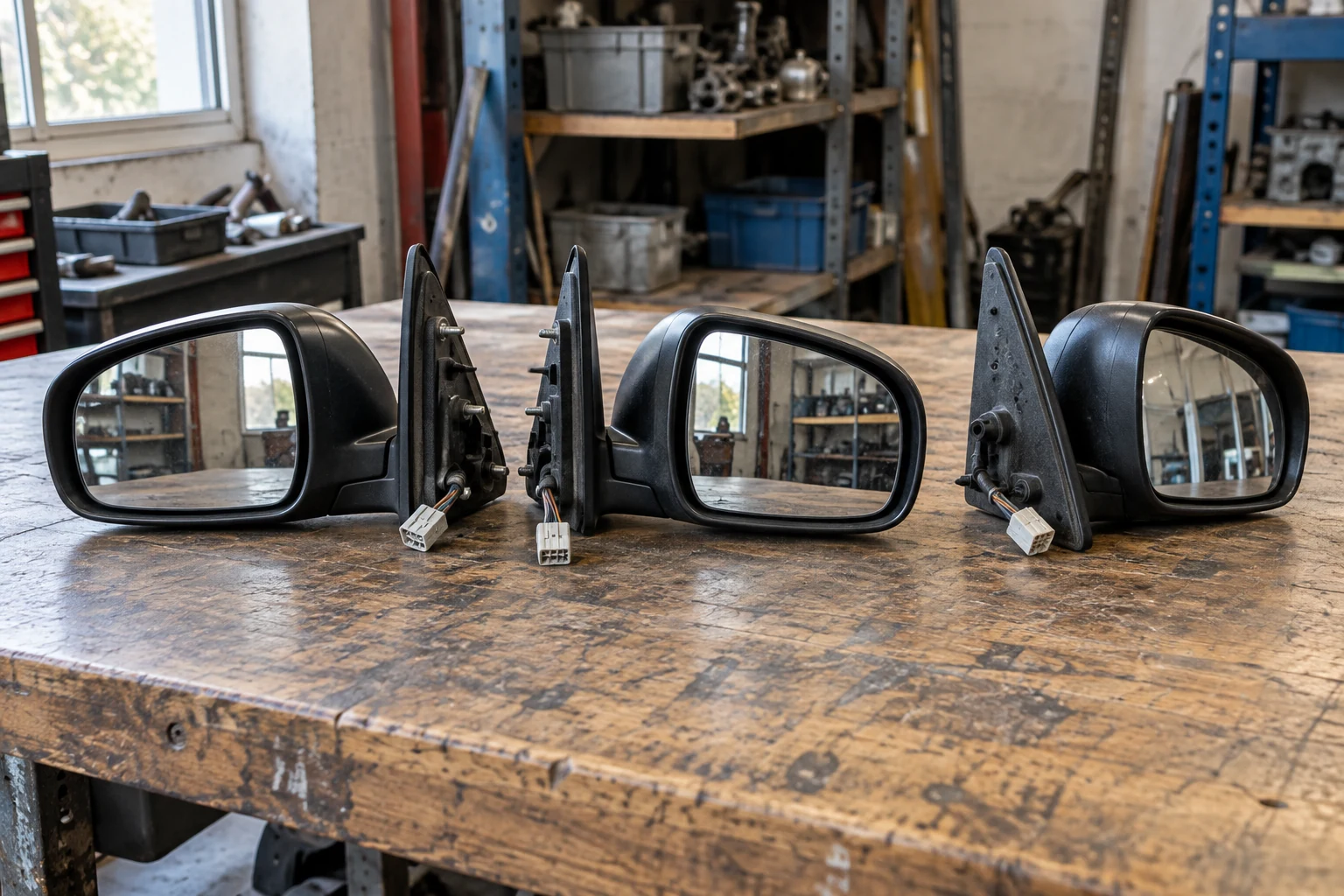
Write the position in full: front or rear, left or right, inner or outer, upper or lower, as applicable. Ask the supplier to confirm how its catalogue defines left and right. “Driver's side” is incomplete unless the steering configuration is also clear.
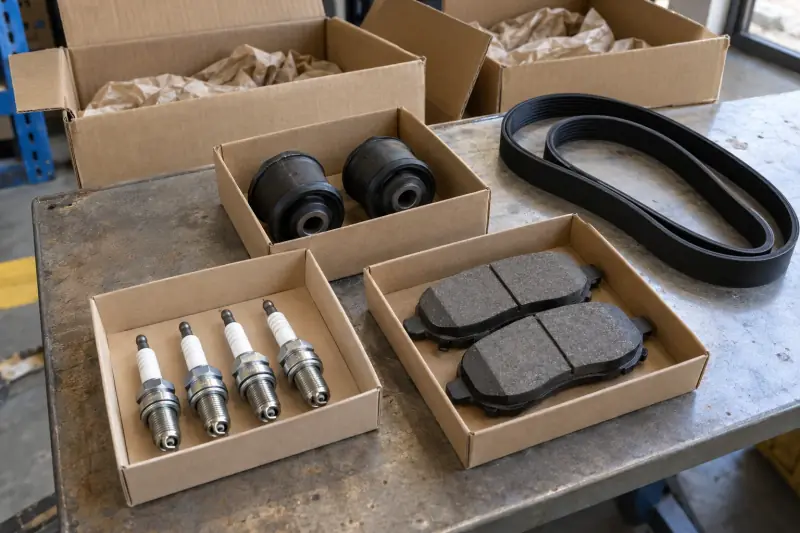
For a pair, identify both sides and whether the quoted price covers one item or the complete pair. For an assembly, list what you expect to receive. A photograph showing several components does not establish that all of them are included in the sale.
Avoid using a picture's orientation as the only position reference. Images may show a part from behind or from an unfamiliar angle. Label the required position in text, then use photographs to support the description.
Connect the description to an exact part number
Copy the complete identifier from the existing part or reliable documentation. Preserve suffixes, spacing, and any characters that might be confused, such as a letter O and zero. Include a readable label photograph where available.
Name the source: existing-part marking, packaging label, earlier invoice, or supplier recommendation. Keep the offered number in a separate field. If the supplier changes it, request the reason and the application evidence rather than overwriting your original reference.
Bosch's Part Finder provides OE cross-references and identification of replacement and current active part numbers. This illustrates a manufacturer-supported lookup approach. It does not mean that every catalogue result establishes suitability for every vehicle variant. Ask the seller to identify the relevant application and any limitations. Bosch Part Finder
Use a specification confirmation card
The following is a suggested buyer worksheet, not a statement that JTLGO performs every listed check.
Scroll sideways or use the arrow keys to see all columns.
| Field | Buyer information | Supplier confirmation needed |
|---|---|---|
| Vehicle | Make, model, year and source of year | Application and any production limits |
| Version | Known engine, transmission, steering configuration | Relevant variant requirements |
| Position | Exact side and location | Catalogue position and side convention |
| Existing identifier | Full number and label photo | Relationship to the offered number |
| Offered identifier | Leave for supplier response | Brand, full number, selected variant |
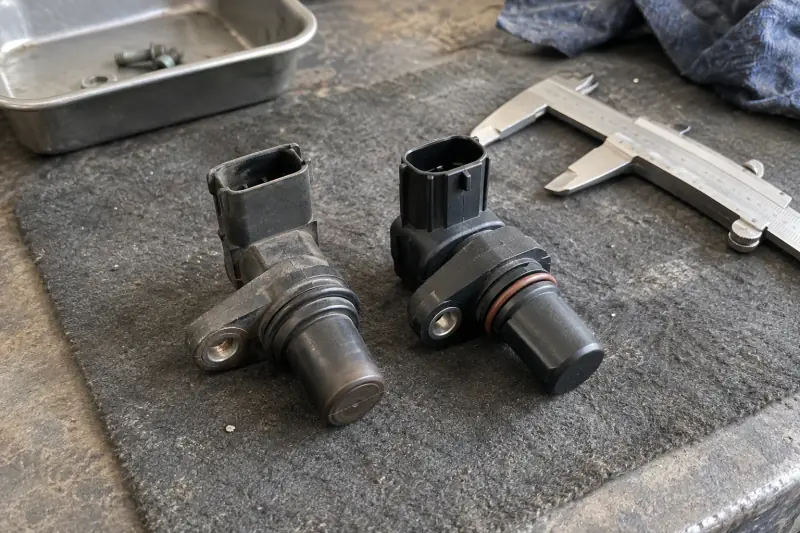
| Visible features | Relevant connectors and mounting photos | Any difference requiring investigation |
| Supplied contents | Requested unit, pair, or assembly | Included and excluded components |
| Open questions | Unknown details clearly marked | Evidence needed and who will provide it |
Add an order reference and a version number to the card. Ask the supplier to answer against that version so a later chat reply cannot accidentally refer to an older specification.
Make photographs and measurements purposeful
Send an overall view, a readable label, and relevant connector or mounting views. Identify each photograph with the order line or component name. If the supplier requests a dimension, agree on the measurement points and units before relying on the result.
Visible similarity can help narrow a question, but it does not establish functional performance or suitability. Do not dismantle safety-critical components to obtain images. If access requires specialist work, ask a qualified workshop to advise.
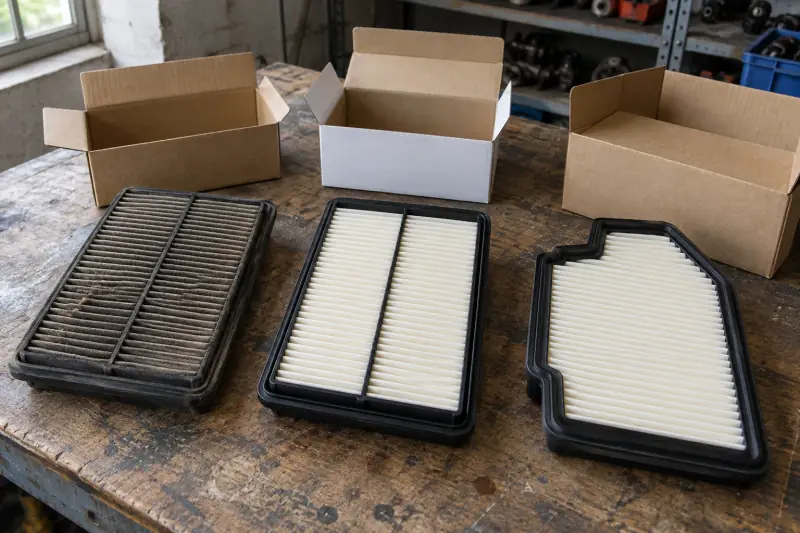
When reviewing the supplier's photographs, ask whether they show the actual offered unit or a catalogue example. Record that distinction. For used goods, an image of a different unit leaves the condition of your proposed purchase unresolved.
Review the answer before authorizing the order
A useful confirmation identifies the offered part, the vehicle information considered, and any remaining conditions. If the reply says only “same model” or “should work,” follow up on the specific unknowns.
Before payment, check that:
- The offered number and selected variant appear in writing.
- Side, position, quantity, and unit are unambiguous.
- Relevant differences have been explained.
- Required accessories and any additional work have been identified.
- The supplier's return and warranty terms are available.
- Cargo condition and destination have been disclosed for shipping review.
Keep the confirmed card with the quotation. A later label comparison at a warehouse can refer to it, but available checks must be agreed separately. Do not assume visual inspection includes functional testing or fitment certification.
Frequently asked questions
Is the registration year enough?
It can start the inquiry. Label it accurately and ask whether the supplier needs model year, production date, or other application information for the particular part.
Can I simply ask for the driver's-side part?
Include the steering configuration and request confirmation of the exact left or right position. A written side reference is easier to compare with a catalogue or order.
What if my vehicle has been modified?
Describe the modification and the component currently installed. Ask a qualified supplier or workshop what information is needed to assess a replacement.
Does matching the connector prove the part is correct?
It provides one comparison point. The offered part's application and relevant specifications still need confirmation; appearance alone does not establish compatibility.
Send a specification that can be checked
Contact JTLGO with your vehicle and part details. Include the known identifier, exact position, vehicle information, quantity, and unresolved questions. Add your destination country and city so the sourcing and shipping requirements can be considered together.
Prepare a specific inquiry
Prepare the OEM or part number, vehicle model and year, clear photographs, quantity, and the supplier’s proposed match. Ask the supplier or a qualified workshop to confirm fitment; photos alone are not a fitment guarantee.