Ship Urgent Parts First or Wait for the Full Order?
Shipping one urgent part ahead can make sense when it enables useful work and a suitable service is available. Waiting may be better when the repair needs several components together or the second shipment would add costs that outweigh the benefit. Start with the repair requirement, then compare actual transport options.
Published pending human review of service details and native-language copy. Confirm service terms with JTLGO before ordering.
On this page
- Quick answer
- Identify the smallest useful shipment
- Establish readiness before comparing speed
- Request two complete scenarios
- Compare timing with the same starting point
- Use a decision table before authorizing changes
- Confirm what happens to the remainder
- Frequently asked questions
- Compare a workable split with waiting
- Prepare a specific inquiry

Quick answer
Ship the urgent part first only if it enables useful work and a suitable service exists. Waiting may be better if the repair needs several components or a second shipment adds costs that outweigh the benefit. Request two complete scenarios, compare them from the same starting point, and decide before authorizing changes.
For this step, see China warehouse consolidation.
A supplier's ready date, a warehouse receipt date and a transport estimate describe different stages. Write each separately. Your requested installation date is a planning need, not a delivery commitment from the supplier or shipping provider.
This guide offers a decision worksheet for buyers arranging auto parts to Africa. It does not establish a JTLGO split-shipment service, storage allowance or delivery schedule. Ask which options are available for your goods and destination.
Identify the smallest useful shipment
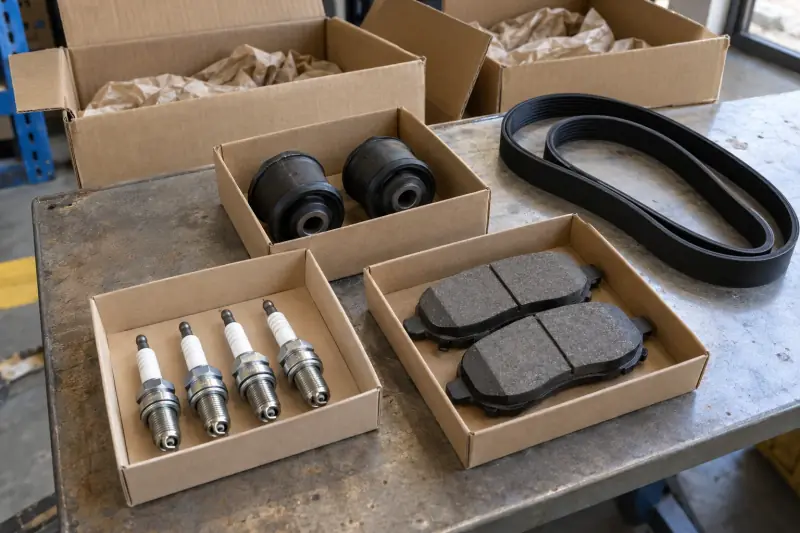
Ask the workshop what it can actually complete if only the urgent item arrives. A component may require a matching seal, mounting hardware, programming information or another part before installation can proceed. Have the appropriate supplier or technician identify those dependencies rather than guessing from a product photograph.
Separate the order into three groups:
- Parts needed together to complete the urgent job.
- Parts useful independently for another job or stock.
- Parts whose identity, condition or availability is still unconfirmed.
Give every line an identifier, quantity and unit. Record which lines must travel together. If one line contains a kit, confirm what is included before splitting it across packages. Sending the main assembly without an essential accessory could create a second wait after arrival.
Establish readiness before comparing speed
“Available” can mean stock shown on a website, stock allocated by the seller, packed goods awaiting collection, or goods already received at a warehouse. Ask what evidence supports each ready date and what work remains.
Scroll sideways or use the arrow keys to see all columns.
| Planning field | Urgent group | Remaining group |
|---|---|---|
| Order lines and quantities | List individually | List individually |
| Required-use date | Your workshop need | Your stock or repair need |
| Seller's current readiness | Confirmed or provisional | Confirmed or provisional |
| Location of goods | Supplier or warehouse | Supplier or warehouse |
| Checks still needed | Identity, condition, count | Identity, condition, count |
| Packed measurements | Actual, estimated or unknown | Actual, estimated or unknown |
| Special cargo features | Battery, fluid, gas or other | Battery, fluid, gas or other |
| Earliest feasible dispatch | Provider to confirm | Provider to confirm |
This is a suggested worksheet, not a booking form. Leave unknown entries visible. An unknown remainder-ready date may materially change whether waiting is sensible; a speculative date should not become the basis of a firm workshop promise.
Request two complete scenarios
Ask for a combined-shipment quotation and a split-shipment quotation using the same overall cargo list and final delivery location. The split scenario should describe both dispatches. A price for the urgent parcel alone is insufficient to compare the whole order.
For each scenario, ask about supplier collection, warehouse handling, packing, storage, transport, customs arrangements and final delivery. Establish whether minimum charges or separate processing fees apply. Mark each cost included, separately quoted, not applicable or unresolved.
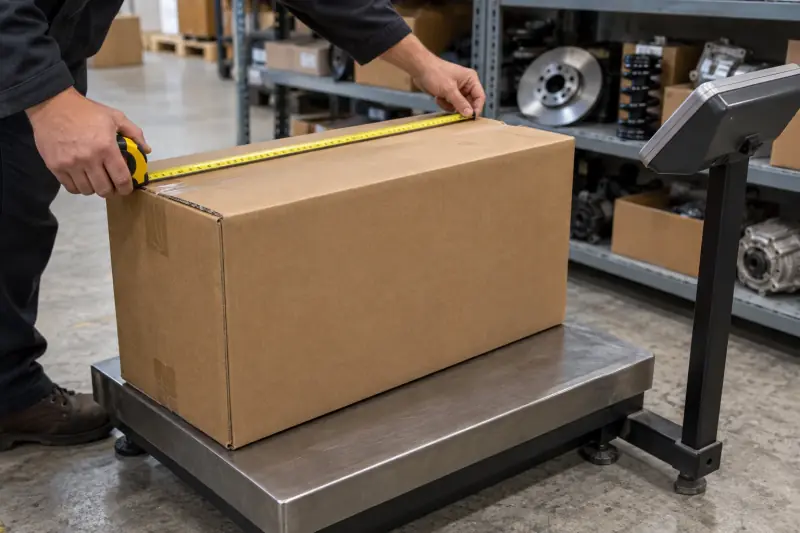
Ask whether removing goods from an existing package requires repacking and new measurements. The urgent group and remainder may each need independent protection. Do not assume that dividing the weight in half divides the freight price in half, or that consolidation always produces a lower total.
If different modes are proposed, verify that each accepts the actual cargo. An urgent shipment containing a battery or a used assembly with residue needs specific review. Urgency does not change product classification or remove acceptance requirements.
Compare timing with the same starting point
For every estimate, ask what starts the clock: receipt, cargo acceptance, completed documentation, carrier handover or departure. Also ask whether the estimate ends at an arrival gateway or the agreed delivery place.
Request the next feasible dispatch opportunity and any prerequisites, rather than asking only which mode is “fastest.” A faster transport segment can be less useful if the goods must wait for missing documents or preparation first.
JTLGO's published terms describe delivery times as estimates rather than guarantees. Keep any quotation's timing assumptions beside your required-use date and discuss the gap explicitly. JTLGO Terms of Service
Use a decision table before authorizing changes
Scroll sideways or use the arrow keys to see all columns.
| Question | Splitting may be worth exploring when | Waiting may be worth exploring when |
|---|---|---|
| Can the first group be used? | It completes a useful job independently | Essential matching parts are still missing |
| Is readiness established? | The urgent group is confirmed ready | Both groups have similar confirmed readiness |
| Is transport feasible? | The proposed first service accepts the cargo | Acceptance or documentation is unresolved |
| Are all costs known? | Both dispatches have comparable quotes | The second dispatch is still unpriced |
| Can you receive twice? | Separate receipt and handling are practical | Two deliveries create substantial extra work |
| Can you tolerate uncertainty? | The plan remains useful if estimates shift | The benefit depends on an unconfirmed arrival day |
There is no automatic winner. If a vehicle is out of service, use your own supported operating-cost estimate when weighing an extra freight charge. Do not treat potential downtime savings as guaranteed or assume the provider accepts liability for them.
Confirm what happens to the remainder
Before approving a split, ask where the balance will stay, which handling is available and what storage terms apply. Confirm whether the remaining goods need further payment, supplier follow-up or new instructions before release.
Keep a revised item list showing first-dispatch quantities, remaining quantities and any cancellations or substitutions. Ask for package references when available, so a later arrival can be matched to the correct portion of the order. Preserve both quotation versions and record exactly which scenario you selected.
Do not authorize “send whatever is ready” if certain components must stay together. A precise release instruction should name the approved lines and quantities, subject to the provider confirming it can perform that arrangement.
Frequently asked questions
Is sending the urgent item first always quicker overall?
No. Readiness, acceptance, packing, documentation and actual dispatch availability affect the result. Ask for a feasible estimate for each complete scenario.
Will two shipments cost twice as much?
There is no universal ratio. Separate handling, package measurements and charging rules can change the total. Compare both complete quotes.
Can I combine the remainder with a later order?
Ask whether this is available and what storage, identification and release conditions apply. Confirm the later order's readiness before relying on it.
Should I book installation from the transport estimate?
Treat the estimate as planning information. Discuss uncertainty with the workshop and confirm the parts are received and suitable before making commitments that depend on them.
Compare a workable split with waiting
Ask JTLGO to assess your shipment options. Send the itemized list, required-use dates, known readiness, packed measurements and destination. Identify which parts must stay together and request the available scope and costs for both scenarios before choosing.
Prepare a specific inquiry
Prepare the item list, quantities, pickup location, carton count, packed dimensions and weight, destination and deadline. Rate & Ship is a preliminary estimate. Ask for manual confirmation of the full charge scope before committing to complex cargo.