Why Shipping Quotes Change After Measurement
A supplier's estimate of an engine's weight is not the same as the measured weight of the engine, crate and protective supports ready for dispatch. A bumper's dimensions can also change once its final protection is added. If an initial freight quote used provisional figures, new measurements may change the quoted amount under the applicable pricing terms.
Published pending human review of service details and native-language copy. Confirm service terms with JTLGO before ordering.
On this page
- Quick answer
- First, identify what kind of quotation you received
- Separate the part from its transport package
- Use a quote-change comparison record
- Understand the charging rule before checking the arithmetic
- Check changes beyond measurement
- Make a decision before approving the next step
- Frequently asked questions
- Ask for a clearly based quotation
- Prepare a specific inquiry

Quick answer
Quotes can change when provisional estimates are replaced by the measured weight and dimensions of the crated, protected shipment. Identify whether your quote was provisional, compare versions in one record, understand the charging rule before checking the arithmetic, and look for changes beyond measurement before approving the next step.
For this step, see Preliminary shipping estimate.
The important question is what changed and how it affected the calculation. Ask for the earlier assumptions, the measured figures and the route-specific charging rule. A revised total should be explainable without requiring you to guess a formula or accept an unexplained difference.
JTLGO offers broad Africa DDP coverage, with South Africa DDP now available. The written quote for your cargo and destination should establish its measurement assumptions and any conditions for revision.
First, identify what kind of quotation you received
Read the initial offer for words such as estimated, provisional or subject to measurement. Ask which figures were supplied by the seller and which were checked after packing. If the status is unclear, request clarification before authorizing further work.
An initial estimate can still be useful for planning when its assumptions are visible. Problems arise when an estimate based on incomplete data is treated as a settled final amount. Keep the initial version so that later changes can be compared against the same starting point.
If you understood the price to be fixed for the stated shipment, ask the provider to identify the provision that supports a revision. Do not assume every later measurement automatically allows repricing; the agreed terms and actual circumstances need to be considered.
Separate the part from its transport package
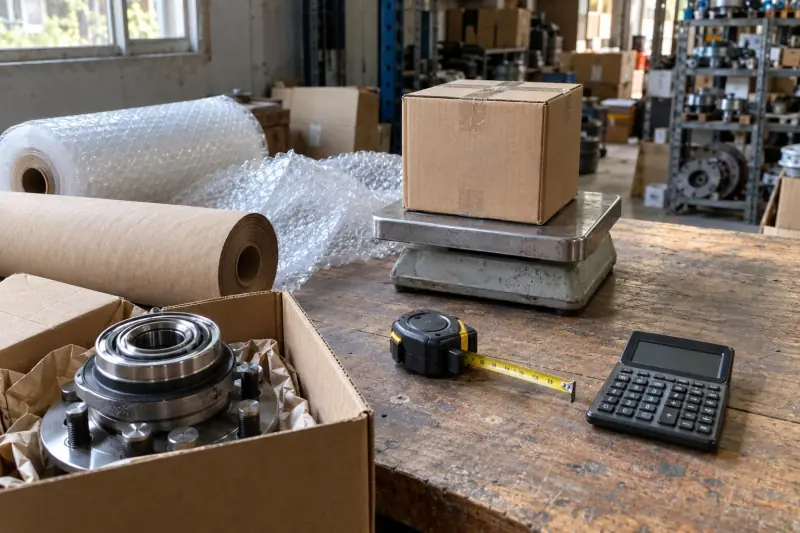
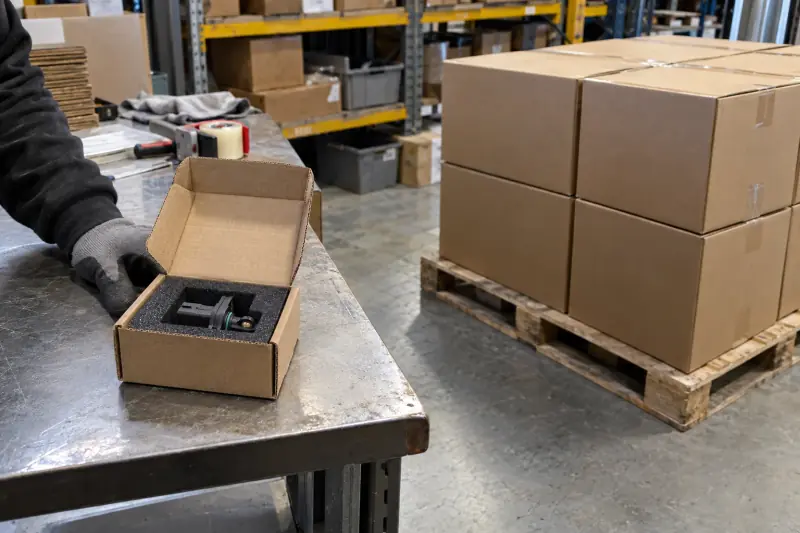
Record net product weight separately from packed gross weight. Ask for external package dimensions, including the crate, pallet or other protective structure used in the finished shipping unit. State measurement units clearly so centimetres, metres, kilograms and other units are not confused.
For a multi-package order, use a separate row for each package identifier. Do not let the overall order quantity substitute for the carton or crate count. A hundred small items may occupy a few cartons, while one assembly may require a substantial shipping unit.
If a package has been altered, record when the change occurred and whether earlier measurements are now obsolete. Ask the provider how irregular shapes, protrusions, rounding and measurement tolerances are treated for that service rather than choosing your own method.
Use a quote-change comparison record
Ask for enough information to connect the revised amount to a specific change. The following table can organize the discussion without assuming every field will affect the price.
Scroll sideways or use the arrow keys to see all columns.
| Field | Initial basis | Revised basis | Evidence or explanation to request |
|---|---|---|---|
| Quote and cargo-list version | Original reference | New reference | Confirmation that the same goods are being compared |
| Package count | Estimated or reported | Actual packed count | Updated packing list |
| Gross weight per package | Original figure and unit | Measured figure and unit | Measurement record, where available |
| External dimensions | Earlier packing assumption | Finished package dimensions | Package-specific measurement details |
| Packaging | Carton, crate or pallet assumed | Actual configuration | Description of the approved packing change |
| Cargo characteristics | Original condition and contents | Corrected description, if any | Supplier clarification or product information |
| Charging basis | Original stated rule | Rule applied to revised data | Route-specific explanation and rounding policy |
| Service scope | Original origin and destination | Any changed arrangements | Written scope revision |
| Total and currency | Previous quote | Revised quote | Itemized difference and validity |
Ask which rows are unchanged as well as which ones changed. If the only new input is a package dimension, a simultaneous change to another charge needs its own explanation. Keep measurement corrections and service additions separate.
Understand the charging rule before checking the arithmetic
Different freight services may price weight, occupied space or other shipment characteristics differently. You need the rule for the service actually quoted, including any minimums and special-piece conditions that apply.
As a carrier-specific example, DHL's weight guidance describes comparing dimensional weight with actual weight to establish a charging basis. That example helps explain why a light but bulky part can matter to a quotation. It does not establish a universal volumetric divisor or the method JTLGO will use for your route.
Ask the provider to show how the confirmed package inputs lead to the revised chargeable quantity and amount. Check the units, package identifiers and any rounding against the written rule. Do not use a generic online calculator to declare an invoice incorrect unless its assumptions match the actual service.
Check changes beyond measurement
Sometimes a revision described as a measurement change also contains other updates. A new delivery address, different packing request or correction to the cargo description may require a separate service assessment. Ask for each reason to be identified.
For auto parts, an earlier description may have omitted fluid residue, a battery or a difference between new and used condition. Explain the actual contents promptly and ask what review is needed. Do not remove a characteristic from the description simply to keep the original price.
Also check whether the quotation's validity period has expired. If a different price now applies, ask the provider to distinguish the effect of updated measurements from any change in the quoted rate or service. This keeps the discussion factual instead of attributing every difference to heavier packaging.
Make a decision before approving the next step
If the new amount is clear, confirm the revised version you accept and the scope it covers. If it is unclear, ask what information is missing and whether dispatch or additional work can wait while the issue is reviewed. Check any applicable storage or holding conditions; do not assume a pause is available or free.
If repacking is proposed, compare protection, handling suitability, packing charges and expected measurement changes together. Ask whether another measurement will follow. Do not authorize reduced protection solely because an estimated freight saving looks attractive.
Keep the final packing record and accepted quote together. They provide a useful reference if an invoice, package count or later delivery question appears inconsistent.
Frequently asked questions
Does a higher measured weight always increase the price?
Not necessarily. The effect depends on the applicable charging rule, thresholds and quotation terms. Ask for the calculation rather than assuming a direct increase per kilogram.
Can I request a recheck of the measurements?
Ask what remeasurement process is available and whether there are conditions or charges. Identify the exact package and discrepancy so the request is actionable.
Does repacking always reduce freight cost?
No universal saving can be assumed. A different package can change weight, volume, handling and packing costs. Compare the complete revised offer and the protection provided.
What if the total changes but the measurements do not?
Ask for the other reason and the relevant quotation condition. Address changes, service additions or a revised rate should be explained separately from physical measurements.
Ask for a clearly based quotation
Contact JTLGO with your cargo list, destination and available packing measurements. Mark estimates clearly and ask which measurement and pricing rules will govern the written quote before you approve shipment.
Prepare a specific inquiry
Prepare the item list, quantities, pickup location, carton count, packed dimensions and weight, destination and deadline. Rate & Ship is a preliminary estimate. Ask for manual confirmation of the full charge scope before committing to complex cargo.