Shipping Batteries, Airbags and Parts with Fluids
A carton of replacement parts can contain very different transport risks. A battery, an airbag module and a gearbox with residual oil need more specific descriptions than “auto accessories.” Those details can affect classification, packaging, documentation, carrier acceptance and whether the products can travel together.
Published pending human review of service details and native-language copy. Confirm service terms with JTLGO before ordering.
On this page
- Quick answer
- Begin with facts the supplier can verify
- Batteries: chemistry, configuration and condition matter
- Airbags and pretensioners need precise identification
- Fluids and residues need a current condition statement
- Can these items share one shipment?
- Pre-shipment declaration checklist
- Frequently asked questions
- Ask about your actual cargo
- Prepare a specific inquiry
Quick answer
Describe each item precisely instead of calling it “auto accessories”: battery chemistry, configuration and condition; airbag and pretensioner identification; and a current statement of any fluids or residue. These details affect classification, packaging, carrier acceptance and whether items can travel together, so send them to JTLGO before arranging shipment.
For this step, see Auto parts DDP route review.
The most useful first step is to describe each item accurately before purchasing or sending it to a consolidation warehouse. JTLGO offers broad Africa DDP coverage and auto-parts expertise, including an open South Africa DDP service. The proposed cargo still requires its own review.
JTLGO’s currently published Terms of Service list hazardous materials as prohibited. This article helps identify cargo characteristics; it is not confirmation that JTLGO accepts dangerous goods. Do not send such items to the warehouse on the strength of this checklist. Resolve classification and service eligibility before purchasing or dispatching.
Begin with facts the supplier can verify
For each item, request its exact name, manufacturer, model or part number, quantity and condition. Add photographs of the actual product, identification labels and original packaging where available. State whether it contains a battery, liquid, compressed gas, pyrotechnic mechanism or any known residue.
Keep supplier statements attached to the corresponding item. If the condition is unclear, record that uncertainty and ask the supplier to resolve it.
Batteries: chemistry, configuration and condition matter
Ask the supplier to identify the battery chemistry. Lead-acid, lithium-ion and other battery types should not be grouped together under one assumed classification. Provide available voltage, capacity, model identification and manufacturer transport information.
Also describe the configuration: shipped alone, packed alongside equipment or installed inside equipment. These distinctions can change the applicable transport requirements. The IATA 2026 battery guidance distinguishes relevant battery types and shipping configurations and explains that its guidance does not replace the applicable regulations.
Disclose damage, defects, recall status and whether the battery is intended for reuse, recycling or disposal. Ask which test summary, classification or other evidence is required for the exact product and route. Do not assume that an SDS alone establishes acceptance, or that installing a battery in equipment makes it ordinary cargo.
Airbags and pretensioners need precise identification
Airbag modules, inflators and seatbelt pretensioners may contain safety-device mechanisms requiring specialist classification. Describe the exact component and configuration, whether it is new or removed from a vehicle, and any deployment or damage history known to the supplier.
Request manufacturer identification and available transport-classification or approval evidence. Do not assign a UN number simply because another product with a similar name used it.
Authenticity matters as well. The US transport regulator PHMSA has warned that counterfeit and substandard vehicle safety devices can introduce additional transportation hazards. Its safety-device advisory is a US safety source, not an African import rule, but it provides a clear reason to question unidentified components and unsupported supplier assurances.
Fluids and residues need a current condition statement
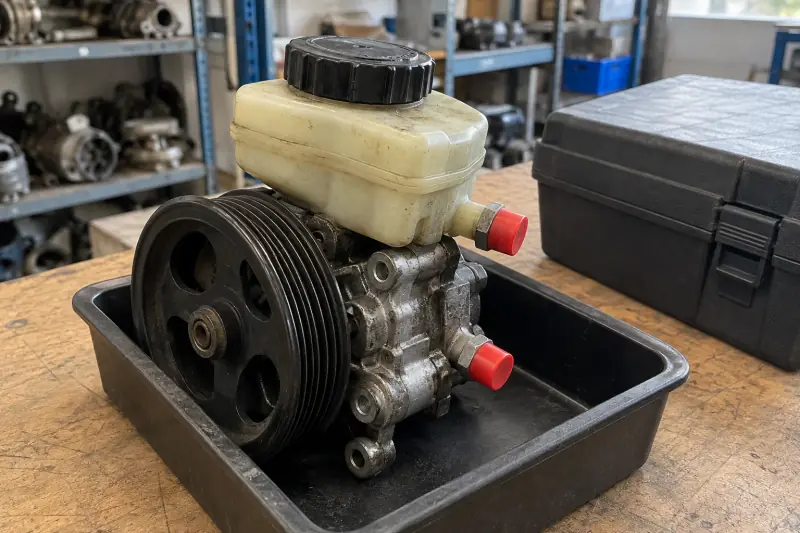
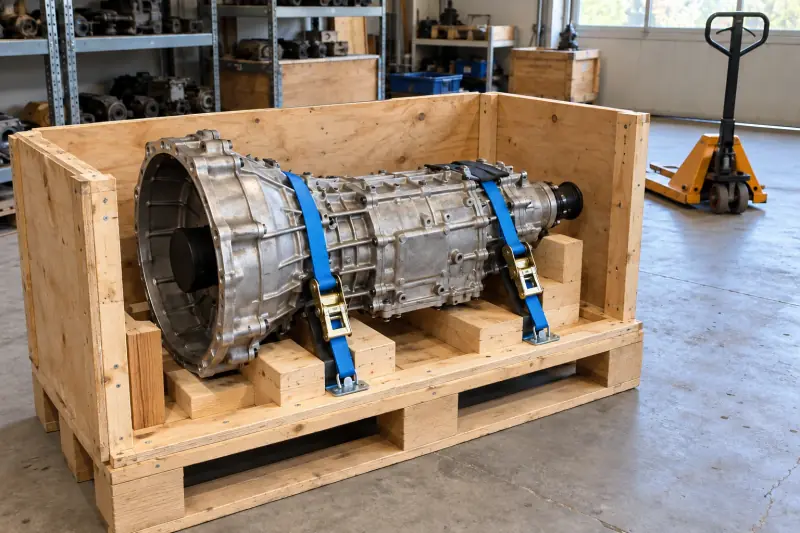
For bottled fluids, aerosols or other chemical products, provide the exact product name and available safety data sheet. For engines, gearboxes and other assemblies, ask what fluids they contain or previously contained and what residue remains.
“Not leaking” describes one visible condition. It does not establish the product's transport classification. Similarly, a supplier saying that a component has been drained should be supported by a clear description of its preparation and remaining condition.
Avoid opening, venting or treating unfamiliar components yourself to make them appear easier to ship. Ask whether professional preparation is necessary and who is qualified to perform it. The FAA's dangerous-goods shipping guidance explains classification and shipment-preparation considerations in the US aviation context; the applicable rules for your actual route must still be confirmed.
Can these items share one shipment?
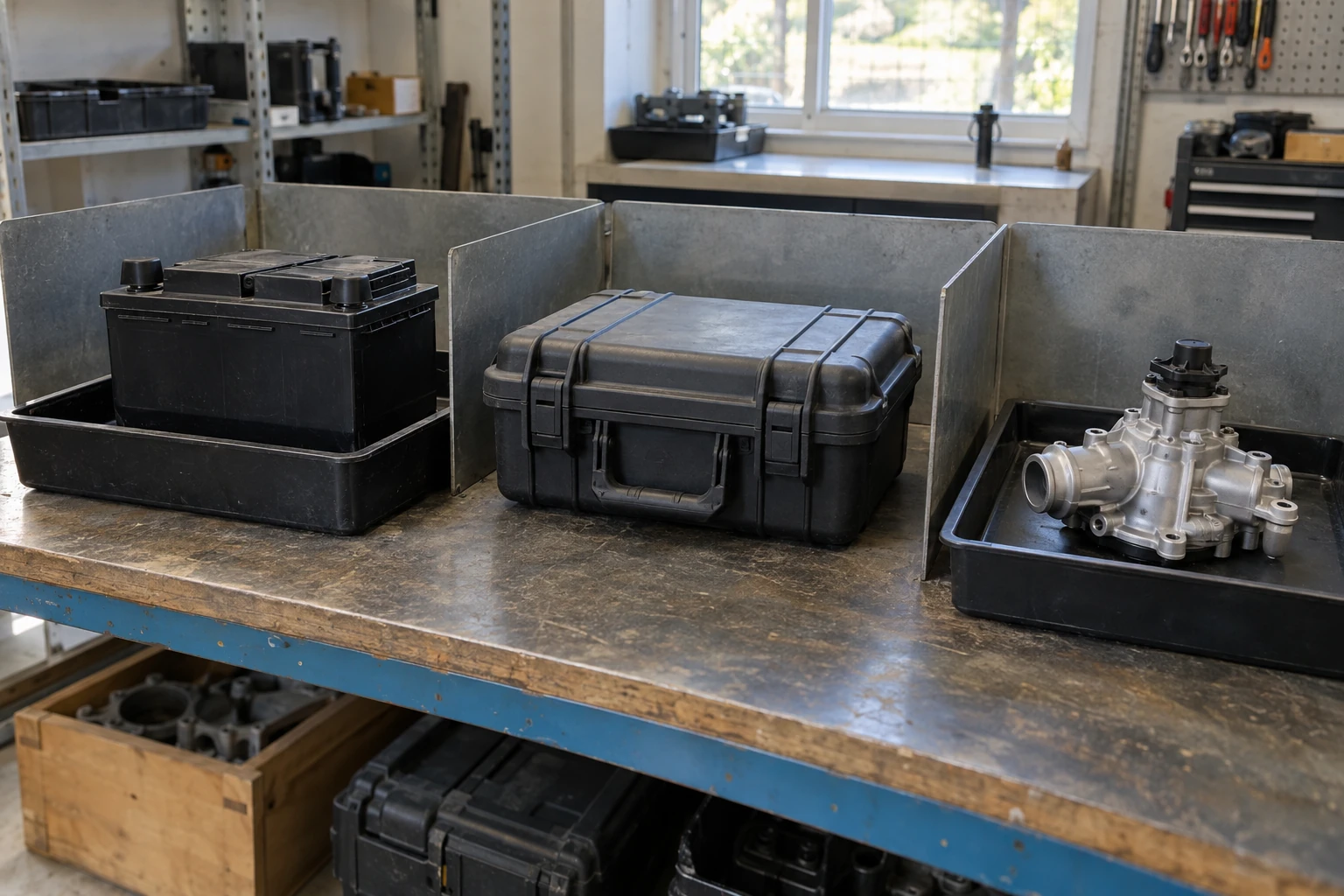
That decision comes after individual classification and route review. Mixing goods can affect packaging compatibility, segregation and carrier acceptance. Being accepted individually does not necessarily mean every item can be packed together under one arrangement.
Ask the provider to identify which lines can travel together, which need separate preparation and which need a different option or cannot be accepted. If the order must be split, confirm revised packaging and costs before dispatch.
Destination import eligibility is another check. A transport solution does not by itself establish permission to import or sell the product in the receiving country. DDP does not remove those requirements.
Pre-shipment declaration checklist
Send the following information for each relevant item:
- Exact product name, part number, manufacturer and quantity
- New, used, refurbished, damaged or other known condition
- Battery chemistry and shipping configuration, if present
- Fluid, residue, gas or safety-device details, if present
- Product and label photographs
- Manufacturer specifications and available transport documentation
- Proposed packaging, package count, dimensions and gross weight
- Origin, destination country and city, and requested delivery timing
- Questions that the supplier has not yet answered
Keep the item list consistent with the invoice and packing information. Report changes before shipping, especially substitutions that alter battery type, fluid content or safety-device configuration.
Frequently asked questions
Does having an SDS mean the item can ship?
No. It is supporting information where relevant. Classification, packaging, route and carrier acceptance still need confirmation. IATA also notes that some SDS documents do not provide accurate transport classification in its dangerous-goods FAQ.
Are all batteries, airbags or fluids prohibited?
There is no single answer for every product and route. Exact characteristics, condition, applicable rules and provider acceptance determine the options. Request a review before purchasing or dispatching. JTLGO’s published terms prohibit hazardous materials; a review must establish whether the specific item falls within those restrictions before any dispatch.
Should I describe a used engine as ordinary machinery?
Use an accurate component description and disclose its condition, fuel or oil history and residues. A broader label removes information needed for assessment and does not resolve a restriction.
Ask about your actual cargo
Send JTLGO the parts list and special-cargo details. Ask what information is needed to establish classification and service eligibility under JTLGO’s published restrictions before purchasing, combining or dispatching these items.
Prepare a specific inquiry
Describe the part, its new/used condition, batteries, airbags, liquids or residue, packing plan, carton count, packed dimensions and weight, and destination. Check prohibited-goods limits first. A packing or quote review does not mean restricted goods are accepted.