Shipping Heavy Auto Parts: Quote Checklist
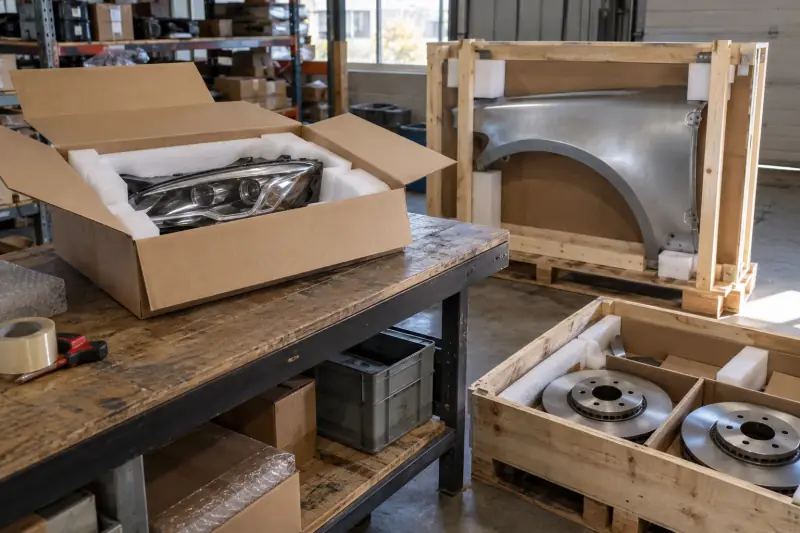
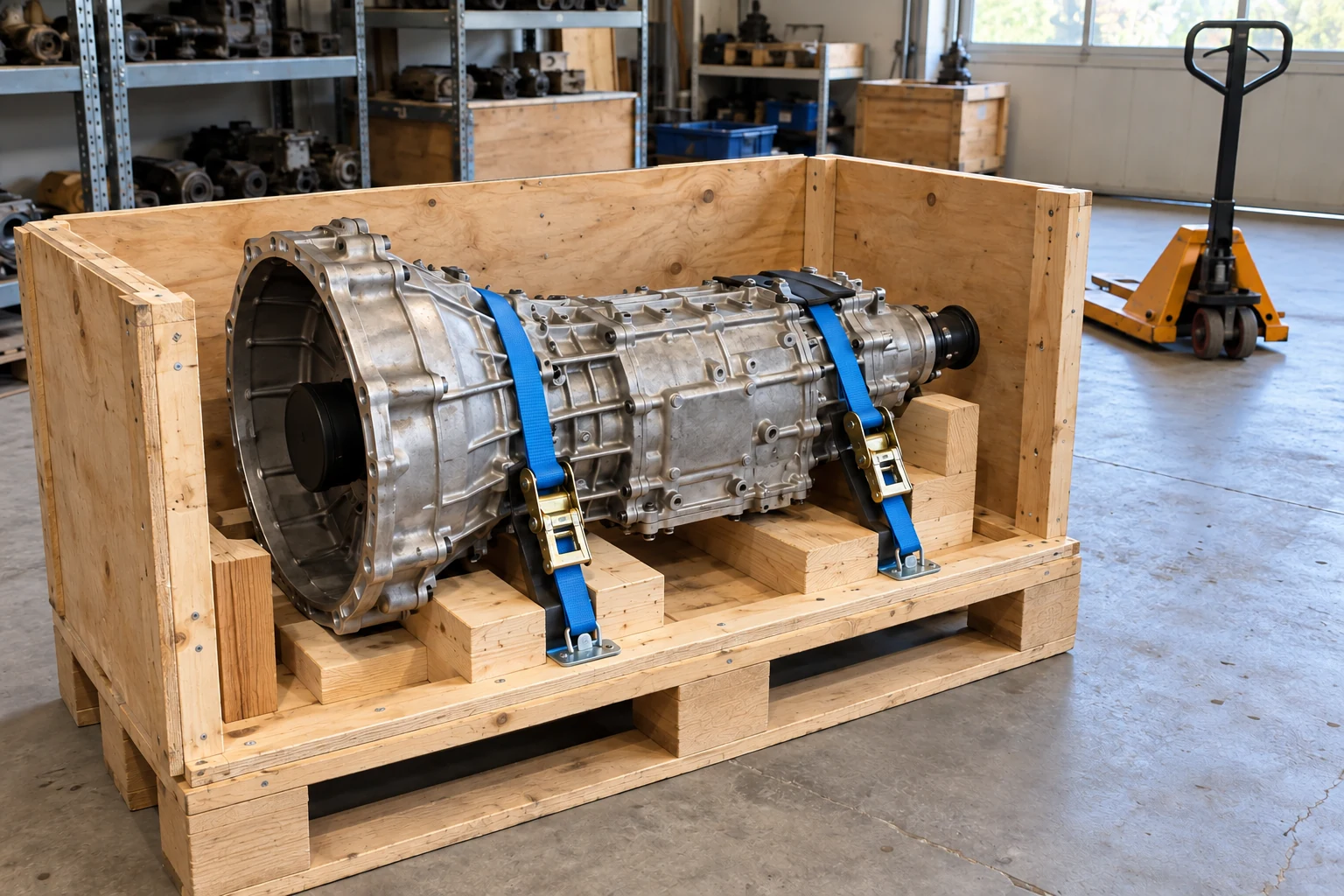
An engine's advertised weight is a starting point, but a shipping quote needs the package that will actually move. A crate, pallet, supports and accompanying accessories can change the total weight, dimensions and handling requirements. The receiving location matters too: delivering a heavy assembly to a workshop with suitable equipment differs from delivering it to a location with limited access.
Published pending human review of service details and native-language copy. Confirm service terms with JTLGO before ordering.
On this page
- Quick answer
- Identify the assembly and its condition
- Request package-level measurements
- Discuss protection and lifting together
- Describe the receiving site before pricing delivery
- Keep DDP and unloading scope clear
- Compare the complete proposal
- Frequently asked questions
- Request a heavy-parts quote with usable details
- Prepare a specific inquiry
Quick answer
Quote the package that will actually move, not the advertised part weight. Provide crate or pallet dimensions, gross weight, protection and the assembly's condition, plus the receiving site's access and lifting equipment. Keep the DDP and unloading scope explicit, and compare complete proposals rather than a single freight figure.
For this step, see China warehouse consolidation.
Before comparing prices, prepare one description covering the cargo, its proposed packaging and the delivery environment. Mark estimates clearly and ask the supplier for missing measurements. This gives the provider a basis for deciding which options can be assessed.
JTLGO combines auto-parts expertise with broad Africa DDP coverage, including an available South Africa DDP service. Acceptance of a particular heavy component, package or address still requires shipment-specific confirmation.
Identify the assembly and its condition
List the exact component, manufacturer or part number, quantity and whether it is new, used or refurbished. Explain what is attached or packed alongside it. An engine assembly with accessories needs a clearer description than “one motor,” especially where that word could also mean an electric motor.
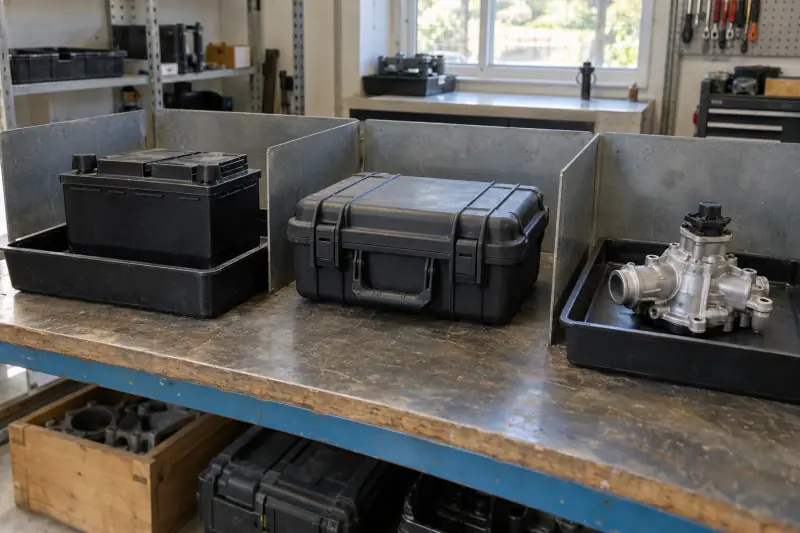
Provide actual-item and label photographs where available. Ask the supplier to describe present or previous fuel, oil, coolant or other fluid content, and any known residues. Used equipment should not be described as ordinary dry cargo solely because no leakage appears in a photograph.
Transport classification and provider acceptance are separate checks. The FAA's dangerous-goods guidance explains the need for classification and carrier review in the US aviation context. It does not establish acceptance for an Africa route. Ask which competent party should assess the exact product and what supporting information is needed.
Request package-level measurements
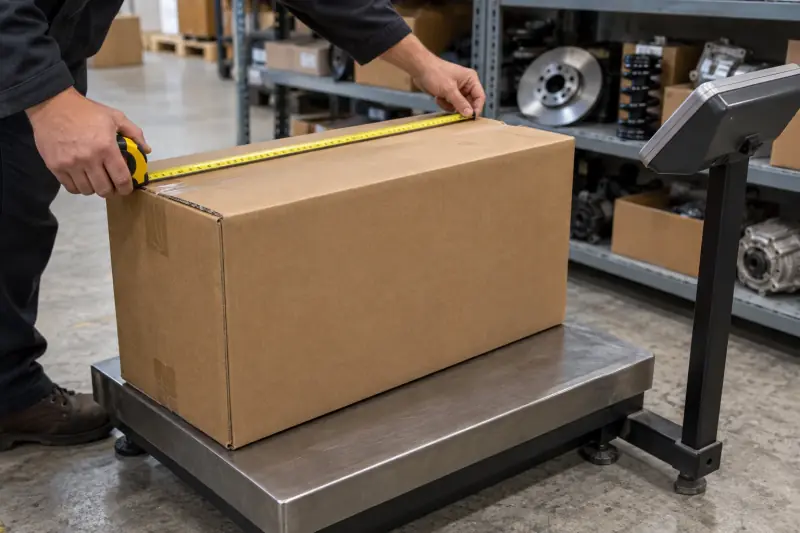
Ask for the length, width, height and gross weight of each planned shipping unit. State the measurement units and distinguish measured values from estimates. Include the pallet or crate in the measurements rather than giving the bare component dimensions.
If there are several packages, identify them individually. A total weight without a package breakdown does not show the heaviest individual unit. Ask whether any attachments protrude beyond the proposed support or enclosure and have the packer clarify how the final external measurements will be taken.
Scroll sideways or use the arrow keys to see all columns.
| Quote field | What to provide | If unknown |
|---|---|---|
| Item identity | Component, part number, condition and quantity | Ask supplier for exact description |
| Package count | Number and type of shipping units | Request proposed packing plan |
| Dimensions | Packed length × width × height, with units | Label supplier estimates provisional |
| Gross weight | Weight of each packed unit | Request packed weighing when available |
| Handling needs | Supplier's lifting or handling information | Ask a qualified handler to assess |
| Special characteristics | Fluids, residue, batteries or other relevant features | Keep uncertainty explicit |
| Delivery place | Country, city, postcode and address type | Confirm before final booking |
These are suggested enquiry fields. They are not a statement that JTLGO provides engineering assessment, weighing or every packaging option listed.
Discuss protection and lifting together
Ask the proposed packer how the assembly will be supported and made suitable for the planned handling. Provide manufacturer handling information when available. Avoid improvising lifting points or assuming the strongest-looking attachment can carry the load.
The IMO/ILO/UNECE CTU Code is non-mandatory global guidance for packing and handling cargo transport units. It highlights risks from inadequate securing, overloading and incorrect declarations. Use it as a reason to involve competent packing and handling personnel, rather than as a do-it-yourself lifting plan.
Confirm whether the quotation includes a pallet, crate, protective materials and any specialist packing work. If wood packaging is proposed, ask the provider to check applicable destination requirements. The IPPC's ISPM 15 standard addresses wood packaging in international trade, with distinctions for exempt materials. A generic description such as “wooden box” does not establish compliance.
Describe the receiving site before pricing delivery
Give the provider useful access information early:
- Is the destination a workshop, warehouse, shop or residence?
- Can the expected delivery vehicle reach the agreed unloading point?
- Are there gates, narrow approaches, overhead restrictions or appointment requirements?
- Is a loading dock or suitable unloading equipment available?
- Who will arrange competent personnel and confirm equipment suitability?
- Is the request for delivery to the unloading point or further movement inside the premises?
Do not assume a named forklift or tail lift is suitable simply because one is present. The responsible operator must assess the package and site. If equipment is unavailable, ask whether another arrangement can be quoted before booking transport.
Keep DDP and unloading scope clear
Under Incoterms® 2020 DDP, delivery occurs at the named place with goods ready for unloading from the arriving means of transport. The ICC Academy's DDP explanation describes this allocation. DDP does not automatically include unloading a heavy assembly, positioning it inside a workshop or installing it.
Ask who arranges and pays for unloading, what the delivery contract includes and who bears the relevant risk. Incoterms govern the sale's buyer and seller responsibilities; a logistics quotation must still explain the provider's actual service scope. Record the agreed unloading point precisely.
Compare the complete proposal
Review packing, transport, delivery and any special handling using the same cargo information. Ask which chargeable-weight or dimensional rule applies without importing a generic conversion formula from another route.
Before approval, confirm quote validity, estimated versus measured inputs, named delivery place, included services and unresolved costs. If packing changes the measurements, request the revised basis and total. Equipment hire, restricted access or a different delivery point should be addressed when identified rather than left as assumptions.
Frequently asked questions
Can I obtain an estimate before the engine is crated?
Ask whether a provisional estimate is possible using clearly labelled supplier dimensions and weights. Confirm what must be measured before a final quote or booking can be approved.
Does DDP mean the driver will unload the engine?
No automatic unloading commitment follows from DDP. Agree the equipment, personnel, charges and responsibility for unloading in the actual service scope.
Are used engines accepted if the supplier says they are empty?
That description needs clarification. Disclose their history and current condition for classification, import and provider review. Do not assume an “empty” statement removes all restrictions.
Will a crate always reduce shipping cost?
No. Packaging may improve protection or handling while adding weight and volume. Compare the quoted total and suitability of available options.
Request a heavy-parts quote with usable details
Send JTLGO your heavy auto-parts enquiry. Include component details, package-level measurements, condition, origin and destination. Describe unloading needs explicitly and ask which packing, handling and delivery arrangements can be confirmed for your shipment.
Prepare a specific inquiry
Describe the part, its new/used condition, batteries, airbags, liquids or residue, packing plan, carton count, packed dimensions and weight, and destination. Check prohibited-goods limits first. A packing or quote review does not mean restricted goods are accepted.