What Can Warehouse Photos Tell You About Your Auto Parts?
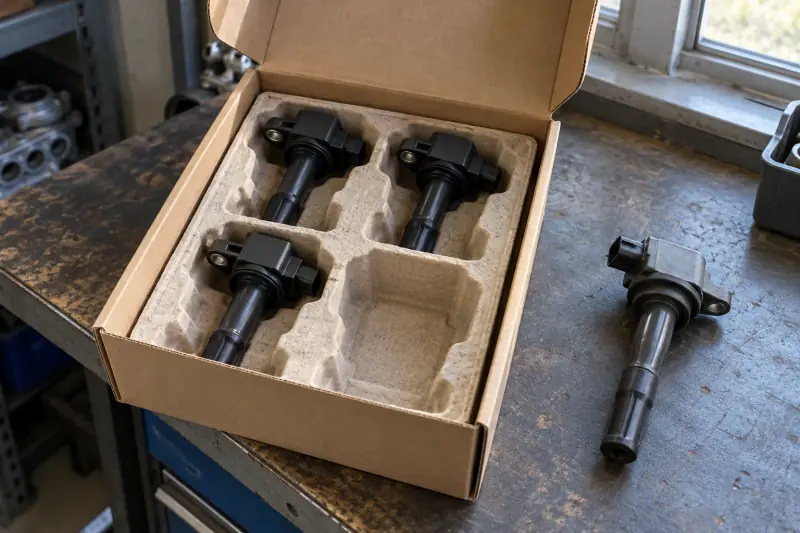
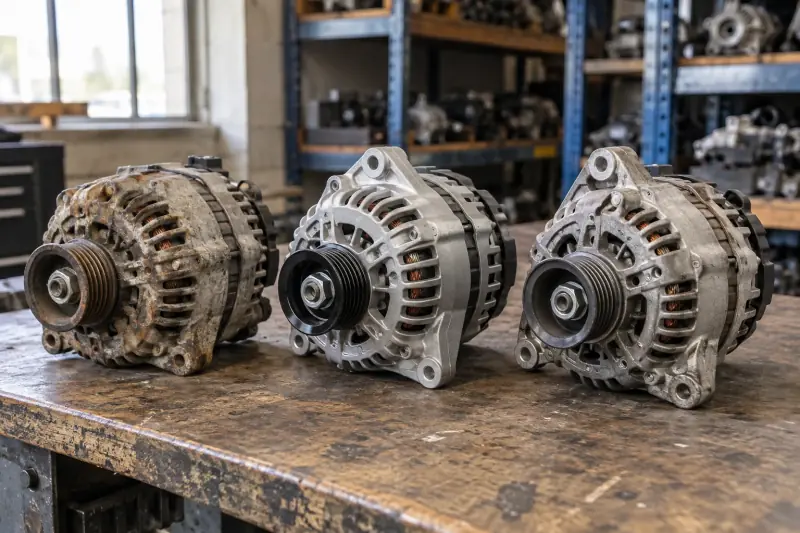
Warehouse photos can help you compare received goods with your order before international shipment. Their value depends on what was photographed, how clearly it was shown, and which question you are trying to answer.
Published pending human review of service details and native-language copy. Confirm service terms with JTLGO before ordering.
On this page
Quick answer
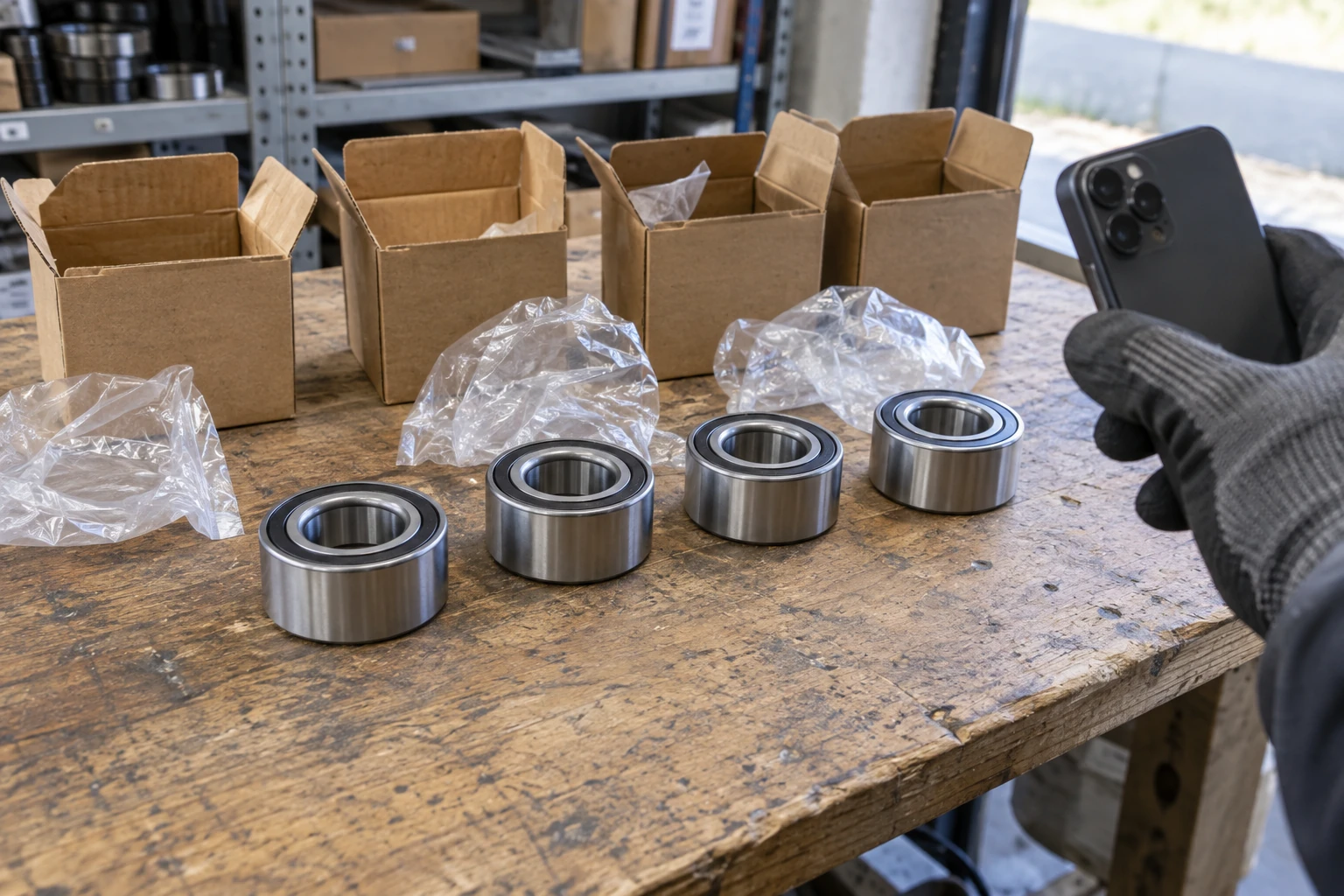
Warehouse photos can show whether what arrived matches your order, but only for the question you asked. Decide the check first, such as label, quantity or visible condition, and request photos that answer it. They do not prove technical fit, so agree in advance what happens if a photo raises a question.
For this step, see Quality inspection scope in China.
A readable label may help confirm the identifier on a received part. An overall image may show visible damage. Neither establishes that an electronic component works or that an assembly will fit a particular vehicle. Treat photographs as evidence with a defined scope, rather than a general approval of quality.
For buyers sending auto parts to Africa, the useful question is: “What do I need to know before approving the next step, and who can provide that evidence?”
Separate four kinds of checks
1. Receipt and package identification
An image of a labelled parcel may help connect a delivery with an order. Ask whether the photograph shows the outer carton, a supplier label, or the actual component. A carton marked with the expected part number is not the same evidence as a readable identifier on the item inside.
When several suppliers are involved, request a way to associate each photo with your order line. File names or a simple reference in the message may be enough; do not assume a dedicated tracking or inspection system exists.
2. Visible appearance
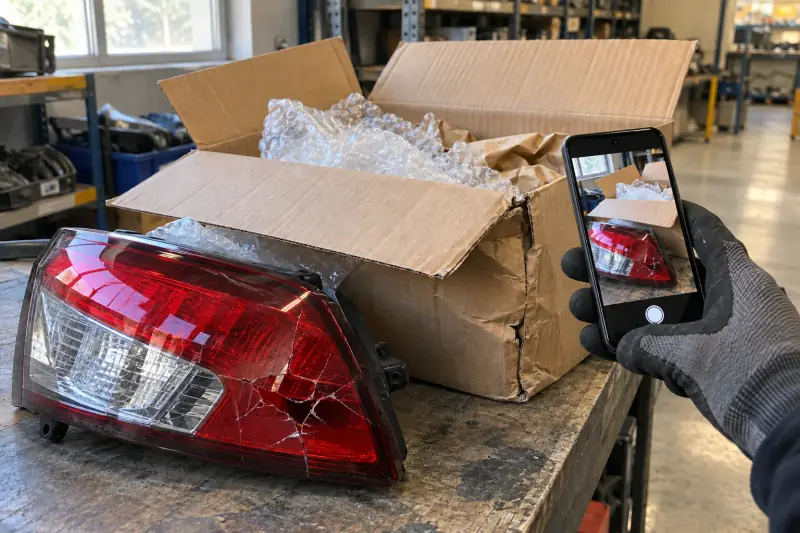
Photographs may show obvious cracks, scratches, bent surfaces, or damaged packaging where the relevant area is visible. They do not show surfaces outside the frame or hidden internal damage.
Describe the area you want checked. “Please show the mounting tabs on this lamp” is more actionable than “please check quality.” Ask whether unpacking or repositioning is possible and whether it affects packaging, cost, or the supplier's return conditions.
3. Quantity and configuration
An image showing three cartons establishes something different from an agreed count of the contents. Similarly, a sealed kit may have a visible label without anyone having checked its individual components.
Define the counting unit: individual pieces, pairs, kits, or assemblies. Ask whether all units will be checked or only specified samples. If sample checks are proposed, agree which items they cover and avoid describing the result as a full count or inspection of the entire order.
4. Function and fitment
Operation, compatibility, authenticity, and regulatory conformity are separate questions. Some may need manufacturer information, application research, specialist equipment, or qualified testing. Do not infer that these are available because a service mentions QC.
JTLGO's public terms describe inspection services while separately addressing product-quality issues from third-party sellers. They do not turn every warehouse check into an unconditional product guarantee. Confirm the actual scope for your order. JTLGO Terms of Service
Write the question before requesting the photo
Use this suggested evidence worksheet before ordering or sending goods. It is a planning aid, not a list of checks JTLGO promises to perform.
Scroll sideways or use the arrow keys to see all columns.
| What I want to confirm | Evidence to request | Possible provider to ask | Availability confirmed? |
|---|---|---|---|
| Received identifier matches the order | Readable actual-item label linked to the order line | Supplier or warehouse | |
| Required accessories are present | Agreed contents list and count | Supplier or warehouse | |
| A particular visible area is intact | Clear close-up of that area | Supplier or warehouse | |
| Part functions under specified conditions | Appropriate test method and result | Qualified supplier or specialist | |
| Offered part matches the vehicle application | Applicable catalogue reference or technical confirmation | Supplier, manufacturer, or qualified workshop |
Ask about cost, timing, handling limits, and what will be reported if the requested evidence cannot be obtained. A service that is unavailable should remain marked unavailable; it should not become “passed” because nothing was reported.
Example: interpreting a lamp photograph
Consider a hypothetical order for a replacement lamp. A warehouse image shows the front lens with no obvious damage. That supports a narrow observation about the visible lens at the time of the photo.
It leaves other questions open: is the received part identifier correct, are the mounting tabs visible, are the agreed accessories included, and has anyone checked operation? The right next step depends on your purchase requirements. You might request a label image and mounting-point photos, then ask the supplier for application confirmation.
This is an illustrative decision exercise, not a JTLGO customer case. It does not imply that lamp testing, unpacking, or additional photography is included in any particular service.
Agree what happens when evidence raises a question
Before dispatch, ask who to contact if the photograph shows a discrepancy. Confirm whether further handling or shipment can be paused, how quickly you must decide, and whether storage, repacking, or return costs may arise.
Keep the original order confirmation and the relevant images together. Describe the discrepancy precisely: “The label in image 3 differs from order line 2” is more useful than “the quality is wrong.” Ask for clarification without assuming who caused the problem.
Do not authorize onward shipment merely because the parcel has arrived. Equally, do not assume that a request to hold goods has taken effect until the relevant service provider confirms it.
A practical approval checklist
- Each image can be connected to the correct order line.
- The agreed visible checks have understandable results.
- Unchecked items are explicitly identified.
- Product identification questions have been sent to the appropriate party.
- Any discrepancy has a recorded next action.
- Your shipping decision reflects the remaining uncertainty.
Frequently asked questions
Does “QC passed” mean the part works?
Ask what “QC” covered. A visual or quantity check does not establish functional performance unless an appropriate functional test was explicitly agreed and documented.
Can clear photos prove authenticity?
Photos may show markings, but appearance alone should not be treated as authentication. Ask the supplier what reliable provenance or manufacturer verification is available.
Should every part be unpacked?
Not automatically. Discuss which checks you need, whether unpacking is available, and its effects on protection, handling, fees, and return conditions before authorizing it.
What if I cannot interpret the photos?
Identify the unanswered question and ask for clarification or qualified assistance. Do not treat uncertainty as approval.
Ask for a check you can actually use
Contact JTLGO about your auto parts checking requirements. Share the order lines and the exact questions you need answered before shipment. Ask which checks and evidence can be provided, what they cost, and which questions must remain with the supplier or a qualified specialist.
Prepare a specific inquiry
Send supplier links, new/used/refurbished condition, quantities by SKU and the visible details to check before dispatch. Basic warehouse photos document appearance; they are not functional tests or technical certification. Agree any extra inspection scope separately.